
From Chaos to Clarity: How to Manage ADHD Overwhelm in 3 Steps

If your brain ever feels like it has 37 browser tabs open, you’re not alone, and you're likely here because you want to know how to manage ADHD overwhelm.
In this post, we’ll unpack what ADHD overwhelm actually is, why it matters, and how you can manage ADHD overwhelm by working with your nervous system—not against it—to move from chaos to clarity.
What I’m about to share is grounded in neuroscience and real-life practice. It’s for anyone with ADHD (diagnosed or undiagnosed), autism, AuDHD (like myself), or anyone who identifies as neurodivergent.
These strategies weren’t just pulled from textbooks—they were forged in the trenches of lived experience: mine, and those of my coaching clients navigating similar territory...

What is ADHD Overwhelm?
ADHD overwhelm isn't just feeling "a bit stressed". It's a neurological response to too much incoming stimulation, information, or internal pressure—causing your brain to effectively go "offline." This isn’t a character flaw or laziness. It’s about executive function overload. Executive dysfunction not only makes it hard to regulate attention, but also emotion, and these two are linked.
Add in sensory sensitivities, emotional reactivity, and low interoception (the ability to sense internal bodily cues), and you’ve got a perfect storm for overwhelm.
Research shows that people with ADHD often have reduced interoceptive awareness, meaning they may struggle to notice the early signs of stress building in the body (Seth et al., 2011; Craig, 2002). This makes it harder to intervene early, increasing the chance of hitting shutdown or meltdown.
This leads us to the overwhelm-shutdown cycle—a common experience for many neurodivergents. It starts with stress building up unnoticed, until the nervous system becomes so dysregulated that it goes into fight, flight, or freeze mode.
Eventually, the brain shuts down as a way to escape the overload. This might look like scrolling mindlessly, zoning out, emotional outbursts, or full shutdowns. And it often leads to shame, self-criticism, and the cycle repeating.
When you have ADHD or autism it may be unreasonable to think that you can avoid overwhelm entirely. It comes with the territory. But as many of my clients will say:
“You know I still get overwhelmed sometimes. But now I know what to do about it...”
In other words they have learned how to manage ADHD overwhelm!
And it's this shift from not knowing to knowing, that leads to an increased sense of control and a boost in self esteem.
Why Self Regulation Matters
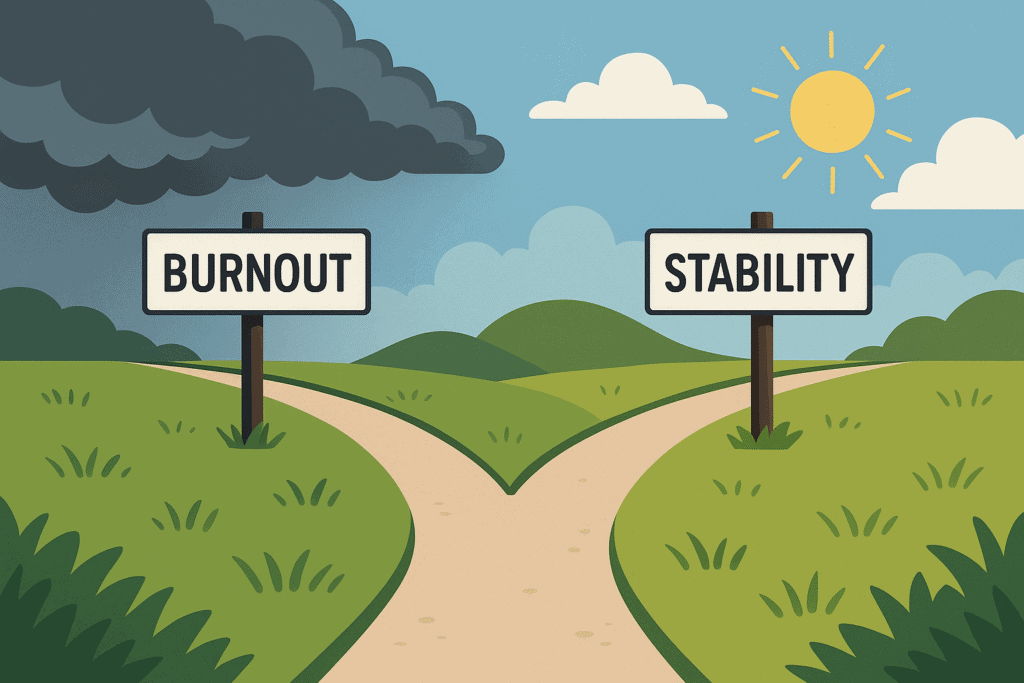
Ignoring ADHD overwhelm doesn’t make it go away. In fact, left unaddressed, it can impact every area of life: work, relationships, mental health, even physical health.
Chronic dysregulation can lead to burnout, anxiety, depression, or learned helplessness. It can erode confidence and make it harder to trust yourself to cope.
But here's the good news: when you learn to understand and manage overwhelm, everything changes. You gain more control over your attention and energy. You become more resilient. You get better at noticing your needs before things spiral.
And even if things do spiral, as they often will, you feel paradoxically more in control when you feel out of control – because you know how to respond to yourself in a healthier way. This is really the definition of self regulation. And as I am fond of reminding my coaching clients:
“Responsibility is actually two words: Response … ability. The ability to respond, rather than react...”
This is especially important for neurodivergent people, because transitions and ambiguity are already hard, whether it be the transition from wakefulness to sleep, from relaxing to focusing on a task, or moving from stress to stability.
Learning to regulate gives you the internal structure that may not come naturally, but that can become more natural through the familiarity of practise.

How to Shift From Overwhelm to Stability
The key is to work with your nervous system, not fight against it. That starts with slowing down, listening, and regulating before trying to fix or figure it all out. After all, when you are neurodivergent, you are often in overwhelm precisely because you've not been listening to what your body needs (low awareness or interoception) and still pushing when your body is asking you to slow down.
Think of it like this: if a friend came to you crying and you immediately said, "Just be positive!"—you’d probably make them feel worse, because they would feel unheard and unseen. But sometimes a friend doesn't need you to give them advice or a solution – what they simply need is someone to listen without judgement. The same is true with your own nervous system.
The ability to slow down and listen is the core of the Eye of Your Storm method that I teach—a 3-phase process designed to move neurodivergents from chaos to clarity - showing us how to manage ADHD overwhelm effectively...

 Phase 1: Slow Down and Listen
This is the "emotional regulation" stage. It's simply about slowing down, being mindful, and listening to the body without judgement.
Helpful practises here include:
- The 321 Reset Method
- Grounding or mindfulness
- Awareness Meditation
- Body Scan
- Breathing with awareness
This can be combined with other practises that involve body movement, that help us to process stress, anxiety and trauma, such as:
- Havening or gentle touch
- EFT, otherwise known as Tapping (like a form of needle free acupuncture!)
- Bouncing up and down gently on the tiptoes (to release cortisol)
- Body shaking
- Walking/any form of movement
- Bilateral stimulation such as lateral eye movements.
These help bring the body into a more regulated state. This is especially powerful for people with low interoception or trauma history, which is common amongst those with ADHD, Autism, and neurodivergence generally.
When we slow down and pay attention to the body, we begin to experience renewed connection of mind and body leading to emotional processing and regulation.

Pendulation (swinging gently between feelings of safety and stress) is a key concept and practise here. It helps the nervous system build tolerance gradually without being overwhelmed. Think of it like dipping your toe into the water instead of diving in. You slowly but surely expose yourself to stress without fear of overwhelm, expanding what is known as the window of tolerance.
You can also use the N.E.E.D.S. acronym to help you explore what might be missing or what needs are currently in need of priority:
Nourishment (food, water, rest?)
Emotion (space to feel?)
Environment (sensory comfort?)
Direction (clear goal?)
Support (connection, reassurance?)
After all, when we have ADHD, we tend to forget our needs, even forgetting to eat, drink, or go to the toilet, because we are either hyperfocused and not willing to slow down, or not even aware of what our body is trying to tell us (poor interoception).

Phase 2: Shift to Solution-Focused Mode
Now most of the time the first Phase is all that's necessary for preventing emotional overwhelm or regulating ourselves from stress to calm. But if you have the time or motivation you may want to go further...
Once you feel a little more regulated (because you did the listening in Phase 1) you can begin to access the prefrontal cortex again (which you can think of as the CEO or Boss of the brain).
This is when you might feel ready to journal, ask gentle questions, or break things down into small, manageable steps. Start simple. Try asking yourself questions like:
What is working right now?
What am I grateful for today?
What’s one thing that feels hard right now?
And what’s the smallest action that I could take to improve that?
Even just writing down your thoughts or worries can help your brain process stress and create clarity. Research shows that journaling supports emotional regulation and can reduce anxiety — especially when you ask helpful, open-ended questions.
The questions you ask matter. Your brain will look for answers based on the questions you give it. So when you ask calmer, more curious questions, you train your nervous system to feel safer and more capable — over time, this builds resilience.
And remember, one of the most effective ways to reduce stress is to take action — even a tiny one. That could mean stretching your body, sending a message, or doing a 2-minute task that’s been on your mind.
The key is to keep it small and achievable. When you take that first step, your brain rewards you with a sense of progress and relief — and that can be enough to shift your momentum.

Phase 3: Reimagine Possibility (Optional but powerful)
If you have time, close your eyes or journal on this:
“If a miracle happened overnight, what would be different?”
This activates what I call Possibility Thinking, which brings creativity, hope, and subconscious processing into play. The key here is to let your imagination loose, and simply imagine what it would be like without censorship.
You might follow this with self-hypnosis, meditation, a power nap, sleep, or simply a pause to allow your subconscious to process this question as well as responses from Phase 2.
And remember – take the smallest possible step to begin moving towards that vision...
In Summary
Remember: Overwhelm is a transition state—you’re between regulation and dysregulation, between chaos and clarity. And neurodivergent people often struggle with transitions, whatever that transition might be.
That’s why having a consistent process or framework matters so much. It acts like a bridge back to stability. The more you practise, the easier and faster it gets because of familiarity (which also provides soothing predictability to the neurodivergent nervous system!), your nervous system learning a pathway that helps you find the proverbial eye of your storm...
Prevention matters too. Regularly engaging in somatic practices, mindfulness, emotional check-ins, and self-hypnosis can help build resilience and prevent overwhelm before it takes hold.
Ready For More?
If you want to explore this further, I invite you to grab my free guide: Eye of Your Storm—a beautifully simple handout that walks you through this 3-phase process with download links to some of the practises mentioned in this blog.
After all, you deserve peace. And you can learn how to return to it. One step at a time...
References:
Craig, A. D. (2002). How do you feel? Interoception: the sense of the physiological condition of the body. Nature Reviews Neuroscience, 3(8), 655–666. Seth, A. K., Suzuki, K., & Critchley, H. D. (2011).
An interoceptive predictive coding model of conscious presence. Frontiers in Psychology, 2, 395.
Tags: ADHD Overwhelm, Emotional Regulation, Interoception, Somatic Practices, Executive Dysfunction, Eye of Your Storm, ADHD Tips